
Music in Desperate Times: Remembering the Women’s Orchestra of Birkenau
 Ars Choralis, a non-profit organization of 48 amateur singers, will perform “Music in Desperate Times: Remembering the Women’s Orchestra of Birkenau”
Saturday, March 28th at 8:00pm
WHERE:
The Cathedral of St. John the Divine
1047 Amsterdam Ave.
New York, NY 10025
212.316.7490
COST:
$150 (dress circle), $45 (front reserved), $35 (front unreserved), $25 (house) http://tinyurl.com/Tickets-for-Performance or 866.811.4111.
WHAT:
“Music in Desperate Times: Remembering the Women’s Orchestra of Birkenau” is a concert – presented by the Woodstock, N.Y.-based choral ensemble Ars Choralis – that interweaves orchestral music with spoken memoirs to bring back the voices and music of the only World War II women’s orchestra. Though over one million people were murdered in the Birkenau gas chambers, the lives of this small group of female prisoners were spared because they played beautiful music.…
CONTINUE READING >
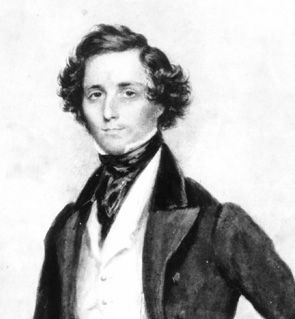 Mendelssohn is have a good year in 2009. Last month in New York, the Museum of Jewish Heritage held concerts of some “new” Mendelssohn works… newly rehearsed after some 100 years. This Saturday Feb 21, 2009, the Austin Civic Orchestra will perform “Fantasy and Variations for Two Pianos and Orchestra on the Gypsy March from Weber’s ‘Preziosa’ ” by Felix Mendelssohn. This will be the first time this piece has been heard since 1833. The manuscript piece, never published, and first performed by Ignaz Moscheles and Felix Mendelssohn was set aside and later owned by Anton Rubinstein. After he donated it, it was lost in the archive of the St. Petersburg Conservatory in Russia for over a hundred years. Southwestern University professor J. Michael Cooper and Jonathan Bellman of the University of Northern Colorado, have painstakingly reconstructed the work.…
 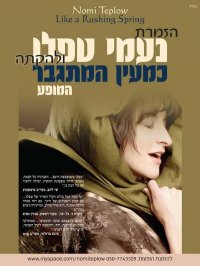 Nomi Teplow launches her CD “Like a Rushing Spring” . This is the premier show for Nomi’s new concert series featuring songs from the new CD “Like A Rushing Spring” as well as some of her popular hits.
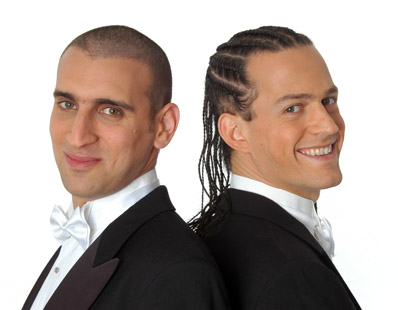 Feel the beat of today’s young Israel in PercaDu‘s performance of Avner Dorman‘s percussion concerto Spices, Perfumes, Toxins! Don’t miss Adi Morag, Tomer Yarivm, Zubin Mehta, and the Philharmonic on this night of exhilarating music-making. A Hear and Now Performance.
 Free Synagogue of Flushing will present a special
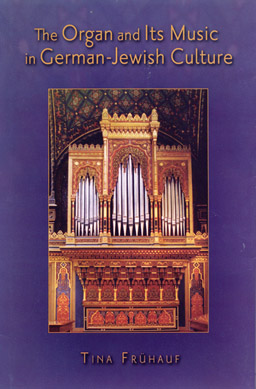 Oxford University Press has released the scholarly work of Dr. Tina Fruhauf, The Organ and Its Music in German-Jewish Culture. The press descriptions states that the book “examines the powerful but often overlooked presence of the organ in synagogue music and the musical life of German-speaking Jewish communities. Tina Frühauf expertly chronicles the history of the organ in Jewish culture from the earliest references in the Talmud through the 19th century, when it had established a firm and lasting presence in Jewish sacred and secular spaces in central Europe. Frühauf demonstrates how the introduction of the organ into German synagogues was part of the significant changes which took place in Judaism after the Enlightenment, and posits the organ as a symbol of the division of the Jewish community into Orthodox and Reform congregations.…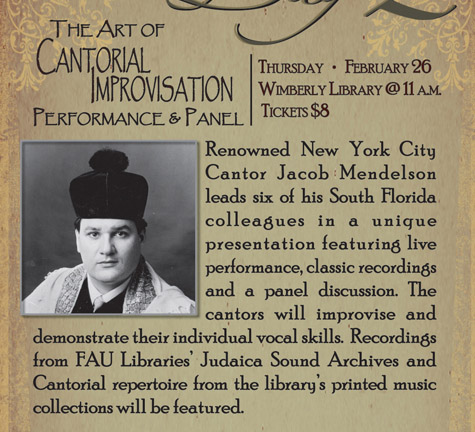
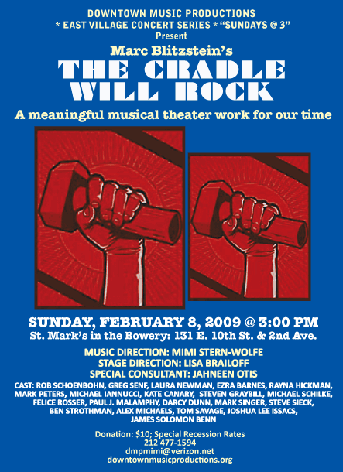 THE CRADLE WILL ROCK by Marc Blitzstein, initially premiered in 1937,
  Carl Nelkin, an amateur singer and lover of Jewish music in Ireland, has released a new CD of songs of ghettos and camps in World War II. Nelkin combines Irish and Jewish sentimentalities to these songs of the Partisans and Ghetto, all sung in the original Yiddish. The booklet contains the translations into English along with the texts in Yiddish, along with some nice accompaniments. It is hoped that this type of recording should encourage other small communities of Jews to share their creative works. Carl had released his first album “Irish Heart Jewish Soul: Favourite Irish and Jewish Songs” in 2003. For more information about the CD, go to
 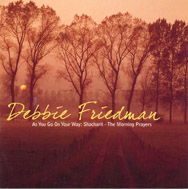 Debbie Friedman has released a new CD “As You Go On Your Way: Schacharit –The Morning Prayers”. This just released CD has a combination of Debbie’s compositions and melodies to the liturgical texts of the Shacharit, the morning service. Some of the songs on the album are new, but many were composed as long ago as 1972. In a way this retrospective is a perspective piece. The “traditional” repetitions, for example are where the text is more traditional (for example, in the Amidah, the Imahot are included in the non- traditional setting.) The album helps the listener integrate the familiar tunes of Friedman with some chanting of segments of the service. Friedman states in her album “By praying we can understand how each Bracha, each blessing, helps us build a balanced and grateful life.